Archive · Jewellery · Ref. 1150
Feather earringsrecord card 1150
A long drop in stamped pale metal. The piece that told you the season had turned before any garment did.
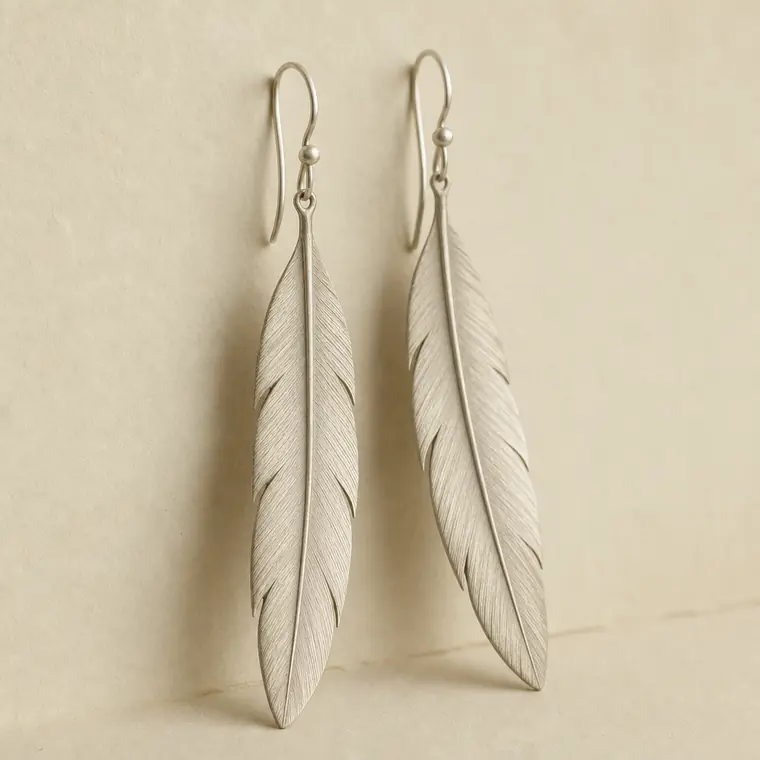
Record card 1150 covers a pair of feather-shaped drop earrings. As with most jewellery in this bracket, the commercial name is the whole description that survives, and it gives the two things that matter: the shape and the drop.
What the shape cost to make
A feather drop is a flat piece stamped from sheet metal, with the vane texture pressed in during the same operation. It hangs from a hook or a small hoop, and that is the entire construction. Two components, one plating pass, no setting and no moving parts, which puts the piece at the very bottom of the production cost scale.
Length is where the design earns its money. A long drop moves with the head and catches light continuously, so it looks like a considered piece from across a room while weighing almost nothing. That combination, high visibility and low material cost, is why long drops appear in every low-bracket catalogue as soon as the weather turns.
Where earrings wear out
At the hook and at the joint. The hook is the thinnest part and the one that gets bent every time the earring goes in, so it work-hardens and eventually snaps. The joint between hook and drop carries all the movement, and the jump ring there opens gradually until the drop is lost. Both are replaceable parts, which is worth knowing before discarding a pair.
The nickel question
Alloy hooks in this bracket usually contain nickel, and the earlobe is the most reactive place to find out. A hook that itches or leaves a mark is not dirty, it is reacting, and no amount of cleaning changes that. Replacing the hooks with surgical steel or titanium is a cheap fix that keeps the original drop intact.
Storing and conserving
Flat, dry and paired, ideally in a small compartment rather than loose in a box, because a long drop bends and a bent drop never sits straight again. Away from perfume and hairspray, both of which reach the plating before they reach anything else, and wiped with a dry cloth after wearing.
If one earring of the pair is lost, the surviving one still belongs in the archive. A single earring documents the shape, the texture and the plating tone just as well as two, and in a catalogue archive the object is evidence rather than jewellery.
Dating the piece
Drop length and surface texture. Very long drops with pressed detail belong to the late two thousands, when the statement earring displaced the necklace as the visible piece; the shorter, plainer drops came afterwards. A brushed pale finish rather than bright gold narrows the window further.
Frequently asked questions
Can this piece be bought?
No. The record card documents an item from a catalogue that no longer exists. The archive neither sells nor brokers, and no price shown on the site is a current one.
Are the feathers real?
No. The description says feather-shaped, and at this price the piece is stamped metal with the vane texture pressed in. Real feather earrings exist but they are a different product with a different cost, and they do not survive in wearable condition for long.
Can broken hooks be replaced?
Yes, easily and cheaply, and it is the sensible repair. Surgical steel or titanium hooks solve both the breakage and the nickel reaction at once, and the original drop is unaffected. Anything involving the plating, on the other hand, is not worth attempting.
Why do earrings date a season better than a necklace?
Because they change faster. An earring is the cheapest piece in a jewellery range to retool, so a new shape reaches the shelf within weeks of appearing anywhere else. A necklace carries more material and more decisions, and it lags behind.